The time is now
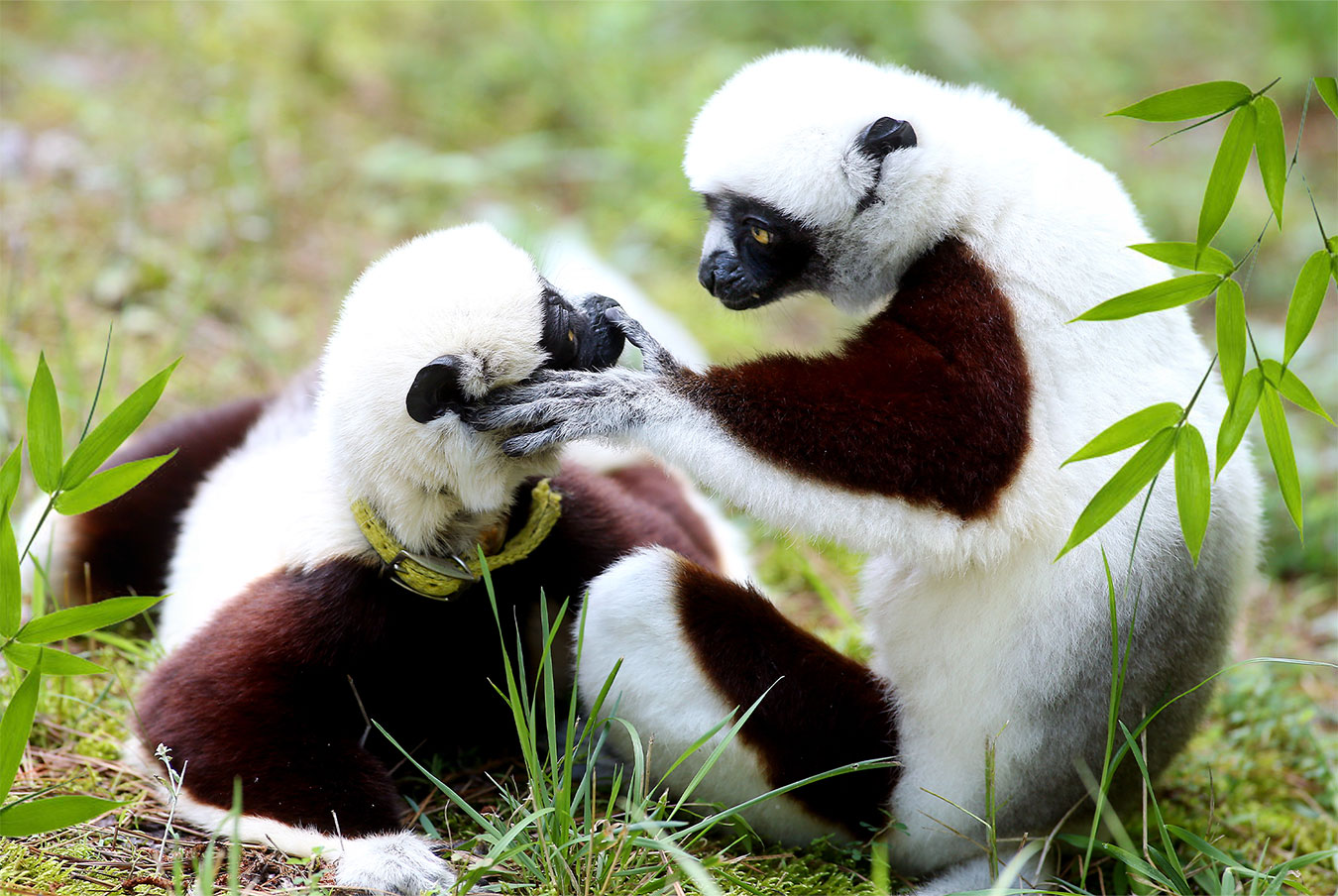
Lemurs are the most endangered mammals on Earth

about
Duke Lemur Center
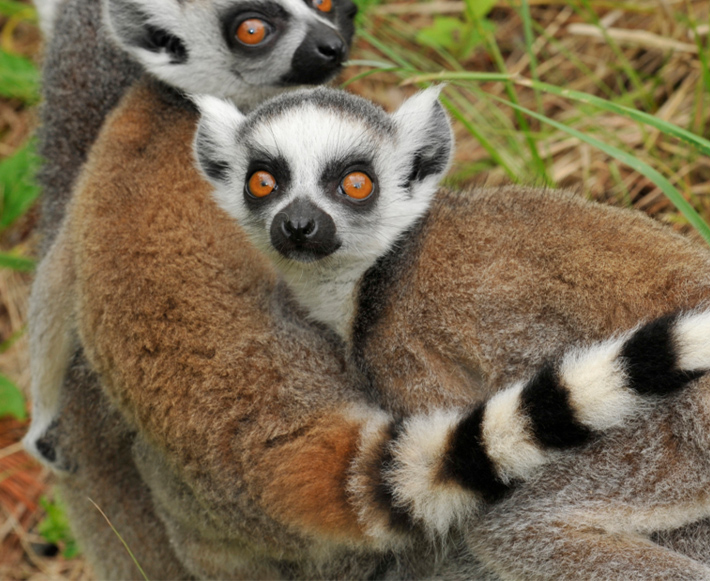
Founded in 1966 on the campus of Duke University in Durham, NC, the Duke Lemur Center is a world leader in the study, care, and protection of lemurs—Earth’s most threatened group of mammals.
With more than 200 animals across 13 species, the DLC houses the world’s most diverse population of lemurs outside their native Madagascar.
Want to visit? We’d love to host you! Just note that tour reservations are required in advance.
Our Mission
To advance science, scholarship, and biological conservation through non-invasive research, community-based conservation, and public outreach and education.
Facebook Feed
On July 9, 2026, a new protected area in Madagascar, Ambanitaza, was inaugurated after four years of planning, fieldwork, and deliberations 💚
➡️ lemur.duke.edu/sava-region-celebrates-new-protected-area
The protected area contributes to a worldwide movement toward socially just conservation, in that:
🤝 The communities who steward the landscape are the leaders in this initiative;
🚜 The landscape is predominantly farmland, with forest fragments that are vital to people and wildlife in an agricultural mosaic; and
🌍 The rights and access to land are co-created with the communities and local branches of government, in partnership with the Duke Lemur Center
Over 150,000 trees were planted, and monitoring and maintenance show that over half are thriving, creating both a canopy and soil to support the natural regeneration of diverse native species. Native lemurs, birds, and even rare endemic carnivores can be found at Ambanitaza, including the fossa 🌱
Visit our website to learn more about our SAVA Conservation Programs! #madagascarmondays ✨ ... See MoreSee Less
5 CommentsComment on Facebook
Sierra Mist's infant just can't wait to be king... No one tell him that lemurs are female-dominant! 🤫
Play is a huge part of infant development for most primate species, including lemurs! Ring-tailed lemurs are the most terrestrial species, hailing from Madagascar's spiny desert, so they spend more than half of their time on the ground. The three-month-old infant hones his motor skills by leaping from branch to branch, wrestling with his older siblings, and (much to Licinius's chagrin) hanging from dad's tail 😂
Please enjoy this compilation of Sierra Mist's infant being goofy in his family's summer enclosure 💙
🎥: Abby Flyer ... See MoreSee Less
18 CommentsComment on Facebook
Mongoose lemurs Maddie, Clancy, and Duggan relax on a balcony in their natural habitat enclosure 😎
20-year-old Maddie, 18-year-old Duggan, and their 5-year-old son Clancy are a trio of mongoose lemurs who free-range alongside a pair of ring-tailed lemurs and a family of Coquerel's sifakas in one of our forest enclosures. While lemurs are very territorial with members of their own species, they don't mind sharing space with more distantly related species—as long as the ring-tailed lemurs don't get a little too frisky and start chasing the mongoose lemurs through the bamboo! We pair species that utilize different vertical space, so the sifakas normally forage higher in the trees than Maddie and family, while the ring-tailed lemurs are more terrestrial 🍃
📸: Sara Nicholson ... See MoreSee Less
4 CommentsComment on Facebook
The unsung heroes of infant wellness exams: GLOVES! 💙
www.amazon.com/gp/registry/wishlist/373AW0NFW38GY/ref=nav_wishlist_lists_1
Our husbandry and veterinary teams run through gloves like no one's business!! Beyond safely cradling newborn lemurs for their infant wellness exams, our staff wear gloves to prepare lemur breakfasts, clean enclosures, and reinforce behaviors with snacks during training sessions 🤗
Did you know that you can help our staff by sending a pack of 1000 gloves directly to the DLC for about $55-60 from our Amazon wishlist? We tend to run through mediums and larges more quickly than other sizes, but we stock up on small through extra large to ensure that staff and volunteers can all find the perfect fit ✨
As always, we appreciate our community of lemur lovers across the globe who help us care for the world's most endangered mammals! 🌍
📸: Sara Sorraia (1,3); Madison A. (2); Jodi S. (4) ... See MoreSee Less
17 CommentsComment on Facebook
Watching baby lemurs grow up 🥹
Blue-eyed black lemur McAvoy has been free-ranging in his family's forest enclosure since he was an infant clinging to mama Leigh's belly! Now, the three-year-old adult male is fully grown and capable of leaping tree to tree with his mom as they spend summer days enjoying this beautiful section of Duke Forest 🌿
Like one third of lemur species, blue-eyed black lemurs are critically endangered, meaning they are at a high risk of extinction. Through both collaborations with Malagasy organizations and our conservation breeding program here in North America, the Duke Lemur Center is working to save incredible species like this. Visit lemur.duke.edu/donate to learn all the ways that you can contribute to the care and conservation of these beautiful animals 🌍
🎥: Abby Flyer ... See MoreSee Less
15 CommentsComment on Facebook
THIS SATURDAY: Help our fossil team unwrap field specimens at this month's FREE DLC Museum of Natural History Open House! 🦴
When our team collects fossils, they wrap them in toilet paper and give them a field number. Then when they get back to the museum, they unwrap them (after some much needed hydration and rest). They take a look at each specimen, see if they agree with their original ID, then assign them accession numbers and put them in specimen boxes 🔍
Open House visitors can help unwrap specimens and get them settled in their new specimen box homes after 50 million years in the badlands of Wyoming. This season, our team found lemur-like primates that evolved in the shadow of the rising Rocky Mountains, guinea pig-sized horse relatives, and crocs with shark-like teeth! 🦷 ... See MoreSee Less
8 CommentsComment on Facebook
Chase away the Sunday Scaries with more pics of baby Paloma 🥹
At seven weeks old, mongoose lemur infant Paloma has started spending more time on mom Bonita's back! Infant lemurs start out life "fanny packing" aka clinging to mom's belly, which provides easy access for nursing. As babies approach two months old, they will transition to "backpacking" and will even start venturing off of mom as they gain confidence. Paloma hasn't been spotted off of mom yet, but watching exuberant big sister Leonor leap around their enclosure might inspire Paloma to start testing her independence! 💖
📸: David Haring ... See MoreSee Less
8 CommentsComment on Facebook
Even more good news from our 2026 Baby Season... Meet our newest Coquerel's sifaka infant! 🤩
➡️ lemur.duke.edu/magdalena-infant-2026
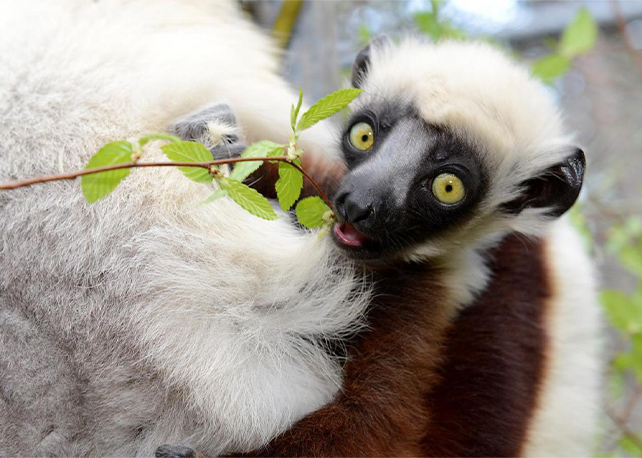
This critically endangered baby girl was born on June 7th and is the second daughter of 9-year-old Magdalena and 24-year-old Gratian. She joins this family of four with mom, dad, and older sister Pax, who was born in 2024. This female infant is a member of an illustrious family—she is the grand-niece of Jovian, the lemur who played the famous Zoboomafoo! ✨
Two-year-old Pax is “obsessed” with her little sister, says Keeper Megan, the family’s primary caretaker. This is Pax’s first infant experience, and her keepers hope that learning to care for her little sister will help prepare her to be a mom herself one day 💖
At two months old, Magdalena’s infant is starting to grow curious about the world around her! “She’s starting to come off Magdalena and eat leaves,” explains Megan, “until she sees you watching her. Then she jumps back on.” 🥺
Through 9/5/2026, Magdalena's infant will be available for an Ultimate Adoption! A new tax-deductible donation of $20,000, which you can opt to pay half now and half in the next year, will allow you the honor of helping the DLC choose the name for this infant. Interested? Learn more on our website at lemur.duke.edu/ultimate 💫
📸: David Haring (1,2,4,5,7); Megan C. (3); Abby Flyer (6) ... See MoreSee Less
13 CommentsComment on Facebook
New Research: Fossil study finds that vision—not the 'thinking' frontal lobe—drove varied brain development in primates 🧠
➡️ lemur.duke.edu/vision-brain-development
A new study led by a Duke University scientist overturns a long-held idea about how primates, including humans, came to have such large and sophisticated brains. The research finds that the dramatic expansion of the primate neocortex was driven largely by vision, not by the disproportionate growth of the frontal lobe often associated with higher reasoning 😱
The researchers used a unique collection of skulls, many from the Duke Lemur Center Museum of Natural History, to create models of the inside of these brain cases to compare the brains of living and extinct primates 💀
Read the whole story on our website! ✨ ... See MoreSee Less
3 CommentsComment on Facebook
Whether handing out breakfast, cutting browse, or making sure the lemurs' homes stay clean, our staff go through LOTS of gloves and cleaning supplies! 💙
www.amazon.com/gp/registry/wishlist/373AW0NFW38GY/ref=nav_wishlist_lists_1
Want to help the Duke Lemur Center keep the nearly 250 primates in our care happy and healthy? You can send items from our Amazon wishlist directly to our staff—including zip ties, gloves, bleach, masks, clippers, and laundry sheets—that go into the behind-the-scenes care for the world's most endangered mammals 😊
(Our keepers will especially love you forever if you send zip ties—they're in high demand for setting up branching and structural enrichment in the lemurs' indoor rooms and screened-in outdoor patios!) 🌿 ... See MoreSee Less
4 CommentsComment on Facebook